This site is is currently under maintenance, please try again later


Axinom On‑Board Cloud
Axinom On‑Board Cloud bridges the once‑wide gap between cabin and cloud, turning every device on board into an edge node of the cloud infrastructure. Manage and deploy cabin software for use cases such as smart cabin, in‑flight entertainment, e‑commerce, or crew applications, and connect it to cloud services. The aircraft becomes a fully integrated part of your digital ecosystem.
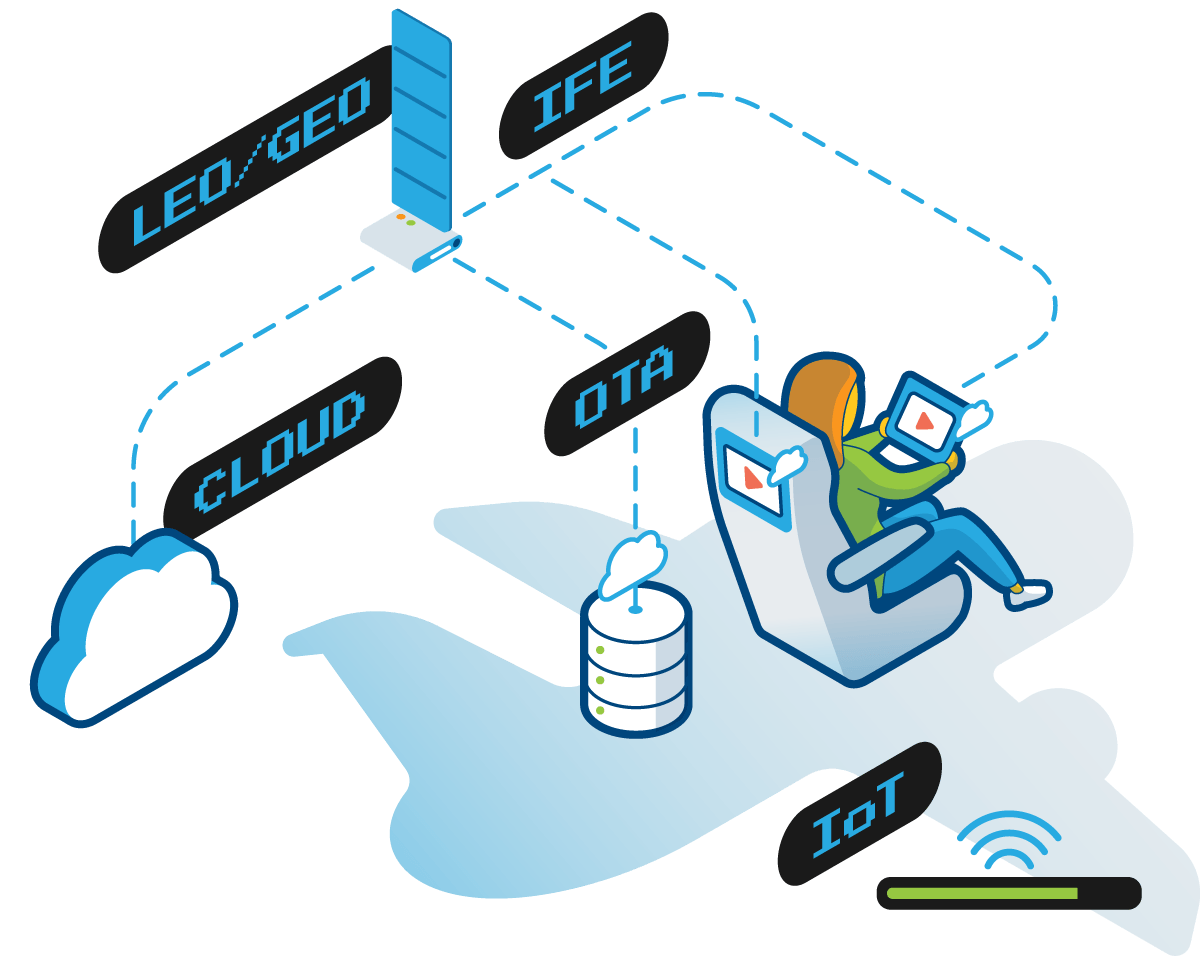
Axinom extends the cloud into and across the aircraft. Need the seatback screen to dim the reading light and recline the seat? The devices on board already talk to each other. Targeting predictive maintenance? Sensors report while the aircraft is still in the air, and services analyze and prioritize on‑board instead of over‑spending on connectivity bandwidth and getting lost in raw gigabytes on‑ground. Want live flight data on the moving map, the crew tablet, and the passenger’s own phone? Avionics data reaches every device that needs it. Want your own application, or a partner’s, running at every seat next quarter? Deploy it as a container from the ground, to the devices you choose.
In‑flight entertainment systems, duty‑free carts, crew applications, and IoT sensors all sit in one ecosystem and speak one language. They exchange information no matter which manufacturer built them, and a new device joins without disturbing what is already installed. The same platform decides instantly whether a request is answered on‑board, reaches the ground, or waits until the link clears.
New ancillary revenue streams, tighter loyalty, enhanced passenger and crew experience, less turnaround time. Every device on board turns into an efficiency booster, not just a cost driver.
















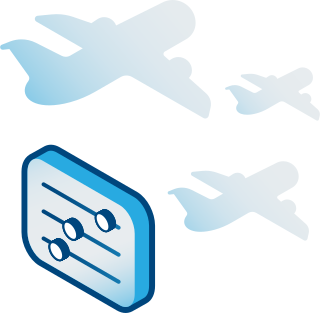
Manage your fleet, devices, software, and content in one place. The On‑Board Cloud management system lets you ingest software and content packages from any source, assign them to entire fleets, individual aircraft, or the devices inside them, schedule updates, and roll back a version when you need to, all from a central dashboard. Backchannel data flows in automatically, giving you the health status and system reports to act on what is happening on board.
On‑board services get and feed their data: from and to the On‑Board Cloud management system, and the wider ecosystem integrated with the platform. Passengers and crew are recognized and linked to your loyalty program and airline accounts, while entitlement decides what each person can access. Provisioning keeps software, configurations, and catalogs current across the fleet, and data from every flight lands in the cloud for analysis, so what happens on board informs what you do next.
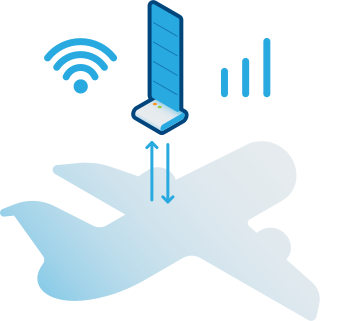
Axinom On‑Board Cloud keeps ground and aircraft connected over whatever link is available, satellite, Wi‑Fi, or cellular, and handles the rest automatically. OTA sync keeps both directions current: software and content flow to the aircraft; live messages, logs, and operational data flow back. Transfers resume after interruptions, critical data gets priority, and bandwidth costs stay under control. No manual intervention, no missed updates, no wasted connectivity budget.
On board, the platform runs on servers, seatback screens, and mobile devices. It hosts and executes your services, from passenger and crew applications to smart cabin and e‑commerce, and manages communication between them. Add or update services from the ground without touching the underlying infrastructure. It is hardware‑agnostic and works with your existing setup, including legacy servers. Partial deployments are supported, so you can start with what you have and expand as your infrastructure evolves.
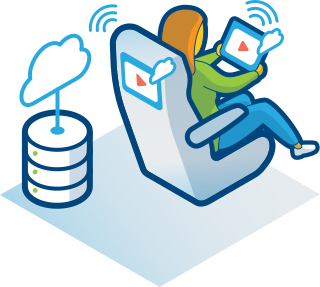

The App Launcher turns the seatback screen into the airline’s own surface. It controls which applications run and how they are presented, so entertainment, shopping, loyalty, and partner apps sit side by side under your branding. New apps are added from the ground, without touching the aircraft.

Passengers identify themselves on their own device and pair it with the seatback screen, so no credentials are entered on shared hardware. Once recognized, personalization, frequent‑flyer status, and payment become available at the seat. Authentication runs in the cloud, integrating loyalty systems and identity providers, and scales reliably with the real‑time requests that high‑speed connectivity brings.

Files are cached where they are used, on the server and on the screens themselves, and shared across an on‑board mesh network. Each file is delivered to the aircraft only once and is then shared between the devices on board, instead of every device pulling its own copy over the connectivity link. The cache fills continuously rather than on a synchronization schedule: on request, by prediction, or pushed from the ground.

The On‑Board Cloud implements CSMIM (Cabin Secure Media‑Independent Messaging), the open standard for cabin communication. Axinom’s central CSMIM Broker, combined with the common standard, enables interoperability of devices from various manufacturers, such as lighting, seats, sensors, and crew tablets. Components report status continuously, so maintenance teams act on trends instead of reacting to in‑flight failures.

One central system manages every aircraft you operate, whatever hardware is installed on board. Assign software and content to an entire fleet, a specific route, a single aircraft, or one individual screen. Every device is registered with its own certificate, so you always know what is on board and what it is running. Once new hardware is installed on board, registering it is all it takes to bring it into the fleet and start delivering software and content to it.

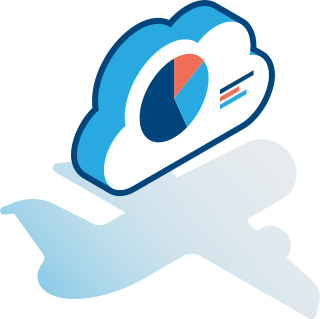
Applications and devices on board produce logs and metrics continuously, and these reach the ground over the backchannel together with usage data. In the cloud, that data feeds dashboards and alerting, and can be routed into your own analytics tooling. Patterns across the whole fleet become visible, so decisions about content, apps, and services rest on evidence rather than assumption.

Microservices architecture on‑ground and on‑board for independent development, deployment, and scaling. Paired with micro‑frontends, the On‑Board Cloud keeps UIs and APIs aligned, minimizes service cross‑impact, and accelerates releases.

Package applications as containerized Software Packages and run them reliably on‑board with a flexible, microk8s‑based orchestration layer. The isolated execution of containers adds multiple layers of security for complete control over data and access.

Clear separation between on‑ground and on‑board components, each with specific roles and responsibilities, while ensuring seamless communication and synchronization between them.

The On‑Board Cloud is highly configurable – adapting to user workflows, fleets, or regulatory needs across both on‑ground and on‑board. Tailored to each customer’s unique requirements, it delivers a competitive edge.

Secure, incremental synchronization of software and content across multiple data transfer channels. The On‑Board Cloud tracks versions to ensure efficient delivery, enable safe rollbacks, and control cost. Reliable on‑the‑fly encryption keeps data protected during delivery and synchronization.

Seamless communication of services in both directions from on‑board to on‑ground and backwards, enabled by a stable, flexible, and error‑proof message communication architecture. Robust and secure integration of additional cabin components through incorporation of the CSMIM protocol.